Read the whole story free, right here. It’s also coming to The Director’s Cut, the paid edition of Commons Cut, where it joins “The Dare at Villa Diodati.”
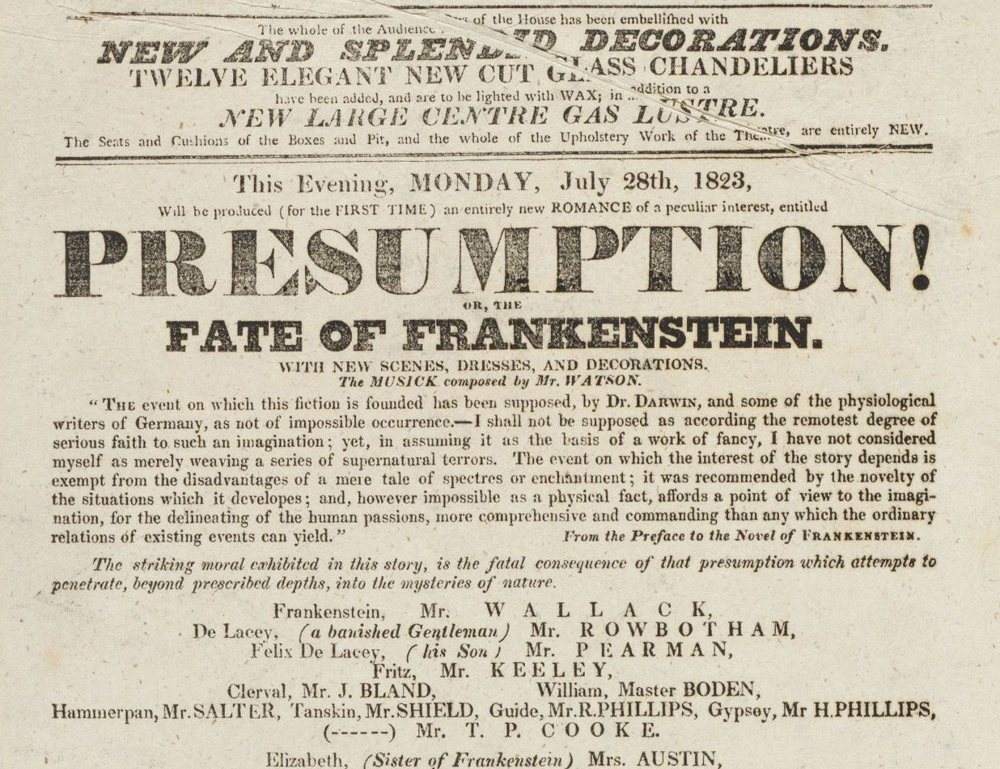
On the last Friday of August, 1823, in London, Mary Shelley is one day short of her twenty-sixth birthday, and it has been a little over a year since her husband drowned. Tonight she has come to the English Opera House with her father, William Godwin, to see a new play called Presumption; or, the Fate of Frankenstein.
She has every reason to be curious, since the novel is hers and it came out five years prior without her name on it. So she reads the playbill the way you read a letter written about you, looking for what they got right.
The creature is in the cast list, and where his name should be, there is a dash.
“--------- by Mr. T. Cooke.”

Afterward she writes to her friend Leigh Hunt. “But lo & behold! I found myself famous!” she tells him. And about the dash: “this nameless mode of naming the unnameable is rather good.”
One hundred and eight years later, in a different theater and a different medium, the lights go down on Universal’s Frankenstein. The opening credits give the actor who plays the monster as a question mark, and Boris Karloff’s name waits until the end. The author, up front, is Mrs. Percy B. Shelley.
Two blanks sit a little over a century apart, and almost everyone who built these two monsters, Frankenstein’s and Dracula’s, got handled the same way. The first blank came out of a rainy summer in Switzerland.
The Summer It Never Stopped Raining
In April 1815 a volcano called Tambora erupted on the other side of the world. A year later the weather still had not recovered, and 1816 went into the books as the Year Without a Summer. By one reconstruction, summer rainfall in Geneva ran about 80 percent above normal.
Far be it from me to say a volcano wrote a novel, but the weather helped. It drove people indoors, and that is how five people ended up in a villa by the lake, enveloped by the grey of the storm and bowered by the rain. The five brought together by this elemental force of geology were Lord Byron, 28 and already famous, his doctor, John Polidori, 20, Percy Shelley, 23, Mary Godwin, 18, and not yet Mary Shelley, and Claire Clairmont, who was pregnant at the time by Lord Byron.
One night Byron dared each of them to write a ghost story. Two of horror’s great monsters grew out of that dare: Frankenstein, and the vampire that leads to Dracula. We told the full story of that summer in “The Dare at Villa Diodati”, the first Director’s Cut piece. This time, the part that matters is who got the credit.
Now listen to how she counted. In the introduction to the 1831 edition of her novel, Mary describes the people who took the dare, and she writes: “There were four of us.”
Five in the room. Mary counted four. Claire, who was there and who was pregnant by Byron, is not in the tally. It is the first erasure in this story, and the author did it herself.
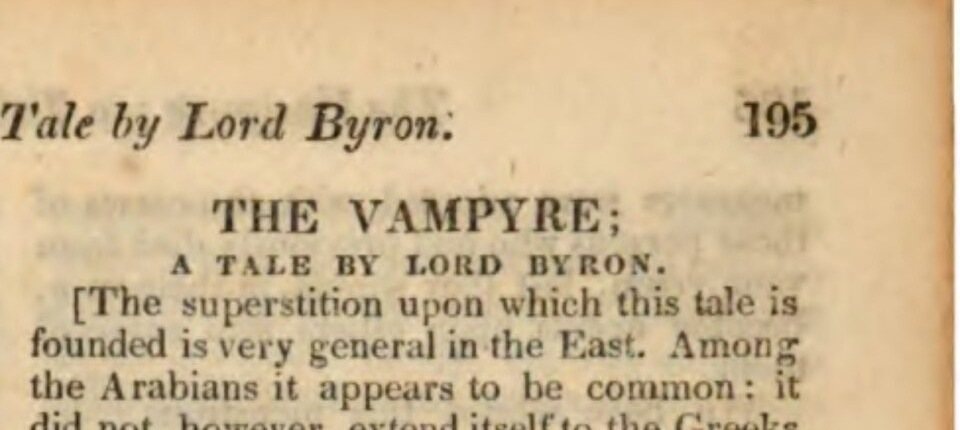
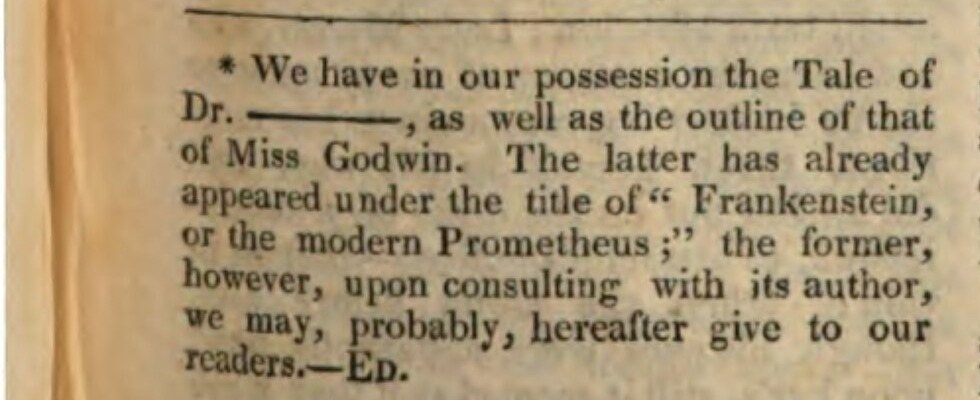
Byron started a ghost story that summer and dropped it before the vampire ever appeared. Polidori, the doctor, took up the idea and finished it as a story called “The Vampyre.” On April 1, 1819, the New Monthly Magazine printed it under the heading “A Tale by Lord Byron.” On the same page, an editor’s footnote credited a new book called Frankenstein to “Miss Godwin.” One page, two credits. The magazine gave the vampire to the wrong man and Frankenstein to the right woman, and even then it used a name she had already left behind, since by then she was Mrs. Shelley.
Whose Book Is This?
On January 1, 1818, Frankenstein came out in a run of 500 copies with no author’s name. Percy had offered the manuscript to publishers as the work of a friend.
Readers guessed, and they guessed him. Walter Scott’s review said “it is said to be written by Mr Percy Bysshe Shelley.” Mary wrote to correct “the mistake of supposing Mr. Shelley guilty of a juvenile attempt of mine.” Even Byron, writing to the publisher John Murray in 1819, had it right: “Mary Godwin (now Mrs. Shelley) wrote ‘Frankenstein’.”
Fair is fair, though: Percy was no bystander. He edited the book and wrote the preface to the 1818 edition, but the story had begun with an 18-year-old at a villa, and the world kept handing it to the older man.
Her name did not reach a title page until 1823, and what finally put it there was a stage play, Presumption, which made the book a hit. Mary told Leigh Hunt, in the same letter where she found herself famous, that her father had arranged a new edition because of it.
The book had to be adapted before it could be signed, and that would turn out to be the pattern.
The Stage Takes the Monsters
Back to that Friday night. Richard Brinsley Peake’s Presumption made the creature a mute, played by T. P. Cooke, and it gave him a line. “It lives!” was spoken on that stage in 1823, and Mary heard it there. The novel does not contain it.
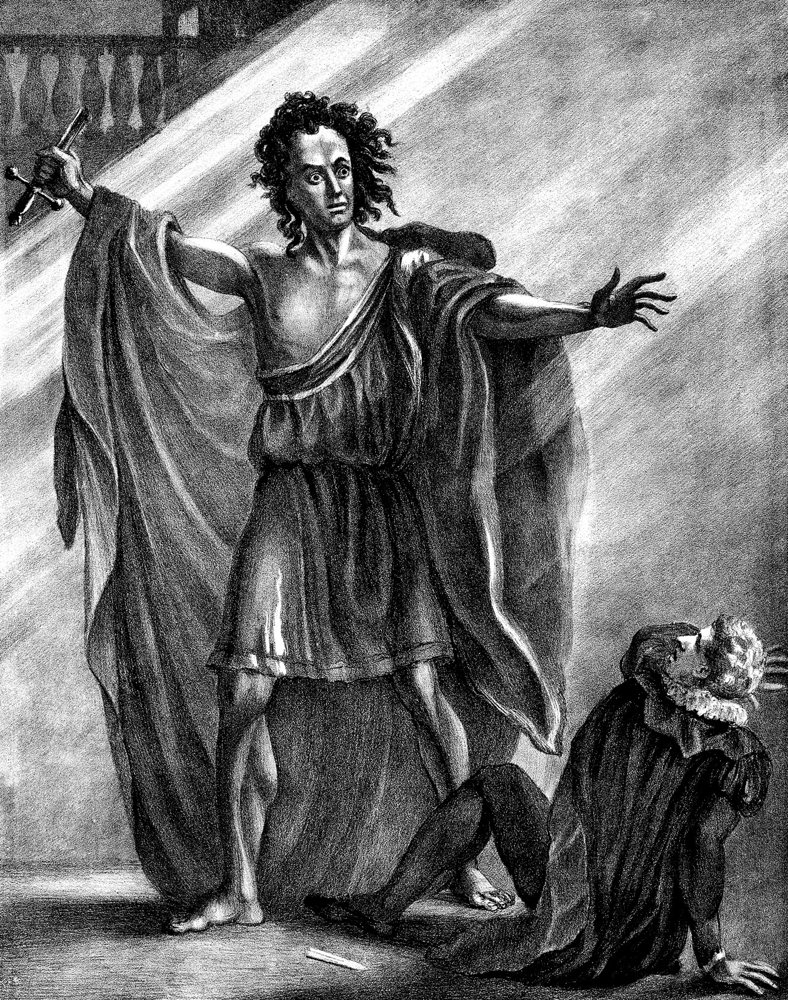
The play had company. The scholar Steven Earl Forry counted at least fifteen dramas that used Mary’s characters between 1823 and 1826.
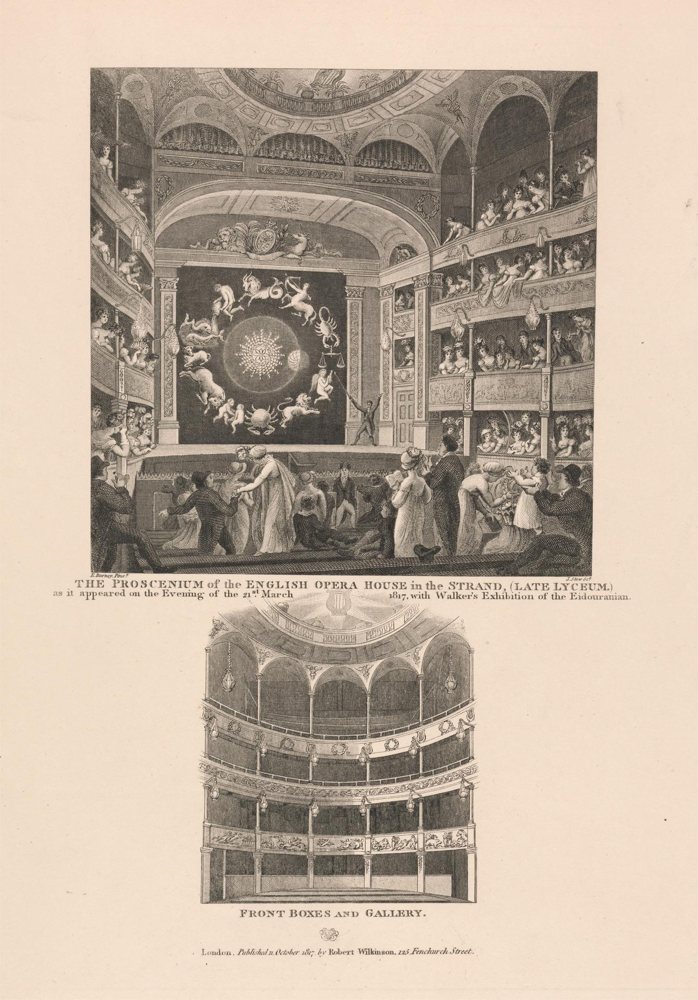
The vampire was working the same circuit. Charles Nodier’s Le Vampire opened in Paris in June 1820. That August, James Robinson Planché’s The Vampire opened at the English Opera House in London and introduced something called the “vampire trap.” Remember the trap.
The English Opera House became the Lyceum, the theater where Bram Stoker later worked.
A Footnote in Whitby
On August 8, 1890, in Whitby on the Yorkshire coast, Bram Stoker comes across a footnote by a writer named Wilkinson: “Dracula in the Wallachian language means Devil.”
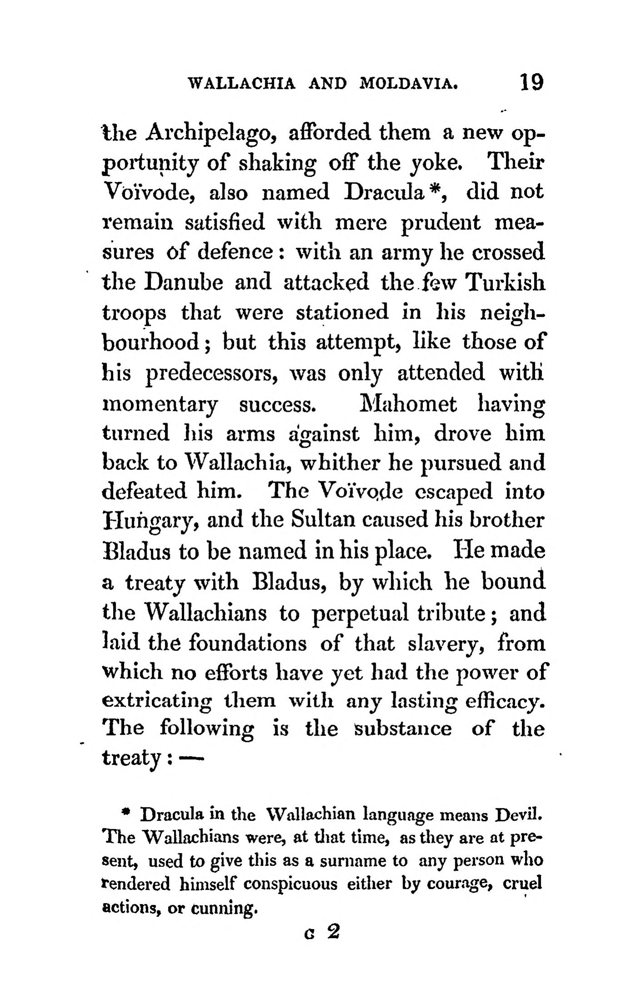
Until that day his villain has been called Count Wampyr.
There is another story about where the Count came from, and it is a theory, not a fact. Stoker’s mother, Charlotte, wrote a memoir of the 1832 cholera epidemic in Sligo, and the scholar McGarry reads the Count as “the personification of Sligo’s cholera.”
Seven years later, on May 18, 1897, Stoker took the stage of the Lyceum Theatre for a one-off reading of Dracula; or the Un-Dead, eight days before the novel was published. The reading was a copyright move, meant to secure the stage rights.
The book was not a hit, and Richard Marsh’s The Beetle outsold it. When Stoker died in 1912, the obituaries barely mentioned Dracula.
Stoker understood rights better than almost anyone in this story, and he died with the book still minor. The person who fought for it was his widow.
The Widow Reads the Program
Florence Stoker noticed a line on the program for a German film called Nosferatu. It said the film was “adapted from Bram Stoker’s Dracula.”
She went after it for years, working through the Society of Authors. In July 1925 a German court ordered every print destroyed. She had won.
She did not get a cent, because the producer, Prana Film, was bankrupt, and as it turned out, the prints did not all go. Copies survived, which is why you can watch the film today.
Florence had also licensed the stage rights to Hamilton Deane, an Irishman from Bram’s part of the country, according to Dacre Stoker, Bram’s great-grandnephew. Deane’s play had opened in Derby in May 1924, a year before the German court ruled. By the time the judge acted, the Count was already on a stage in England, wearing a dinner suit.
The Cape on the Wires
In Derby in May 1924, Hamilton Deane’s Dracula opens, and it throws out Transylvania and sets the Count loose in London society. The first actor to play him on stage, Edmund Blake, wears his own dinner suit.
Then there is the cape. According to a 2024 Guardian report, the high-collared cape hung on wires, so the Count could drop through a trapdoor and leave the cape dangling in the air behind him. It was a trapdoor again, a century after the vampire trap.
In 1927 a Broadway rewrite by John L. Balderston opened at the Fulton Theatre on October 5 and ran 261 performances, with Bela Lugosi as its star.
Now the hinge. Deane’s company was also producing Peggy Webling’s Frankenstein, which opened in Preston that December. The company toured it in repertory with Dracula, and in 1930 Deane himself played the monster in London. And Balderston, the man who rewrote Dracula for Broadway, went on to adapt both plays.
One touring troupe and one rewrite man stand behind both 1931 films. A lot of what the world thinks of as Dracula came out of a company working the English provinces, and so did a good share of Frankenstein.
The Other Woman
Two women made Frankenstein what it is. The 1931 film credited one of them as Mrs. Percy B. Shelley, and the other wrote the play it was built on.
Peggy Webling (1871 to 1949) was a novelist and playwright whose version of the story turned the creature and his creator into doppelgängers and made the creature more human. And according to a summary of the 2024 critical edition of her scripts, hers was the first telling in which the creature is called Frankenstein.
In April 1931, Universal bought John Balderston’s unproduced American rewrite. A 1953 New York Times report, as cited secondhand, says Webling and Balderston split $20,000 and one percent of the gross.
Balderston had a view of her work, and he called her play “illiterate” and “inconceivably crude,” as quoted in David Skal’s The Monster Show. It was still the play the film was built on.
Her scripts sat unpublished until 2024, when her great-grandniece, Dorian Gieseler Greenbaum, and the scholar Bruce Graver brought them out in a critical edition. One chapter is titled “The Other Woman who Created Frankenstein.”
The Night Shift
Universal starts with Dracula.
Tod Browning has been pitching it since 1920, and Carl Laemmle Sr. keeps saying no. His son, Carl Laemmle Jr., says yes in 1930, and the plan is to cast Lon Chaney, who dies that year. Universal pays $40,000 for the novel and play rights, a figure the AFI catalog attributes to “modern sources.” Louis Bromfield and Dudley Murphy write drafts, and the shooting script, credited to Browning and Garrett Fort, draws “most of all” on the Broadway play.
The film opens on February 12, 1931, and, according to Rhodes, critics and the public “rechristened it as a ‘horror movie.’”
When Browning’s crew went home for the night, another crew arrived.
George Melford is shooting a Spanish-language Drácula on the same sets, with a Spanish, Mexican and Chilean cast that included Carlos Villarías and Lupita Tovar. Melford does not speak Spanish, so co-director Enrique Tovar Ávalos and a team of interpreters run the floor.
The Spanish version finishes days before the English one, and in 2015 it was added to the National Film Registry. Some critics call it the better film, and Rhodes argues the usual evidence for that is faulty.
Frankenstein is messier. Robert Florey is assigned first. He writes the first outline, then co-writes with Garrett Fort, and Lugosi is the prospective star. Then James Whale takes over, and Florey and Lugosi are moved to Murders in the Rue Morgue.
John Russell, uncredited, adds the criminal-brain device. Francis Faragoh gives Fritz his lines and softens the monster. Florey, who lives near a bakery with a windmill logo, finds himself considering a windmill as a key location. That windmill “got lodged in the collective brain of the filmmaking team,” and it ends up as the burning setting for the climax. On European prints, Faragoh’s name is swapped out for Florey’s. The final cost is $291,129, and censors in Kansas and Quebec cut scenes.
The man who first imagined the windmill did not direct the movie, and European prints put his name where Faragoh’s should be.
Who Owns a Face
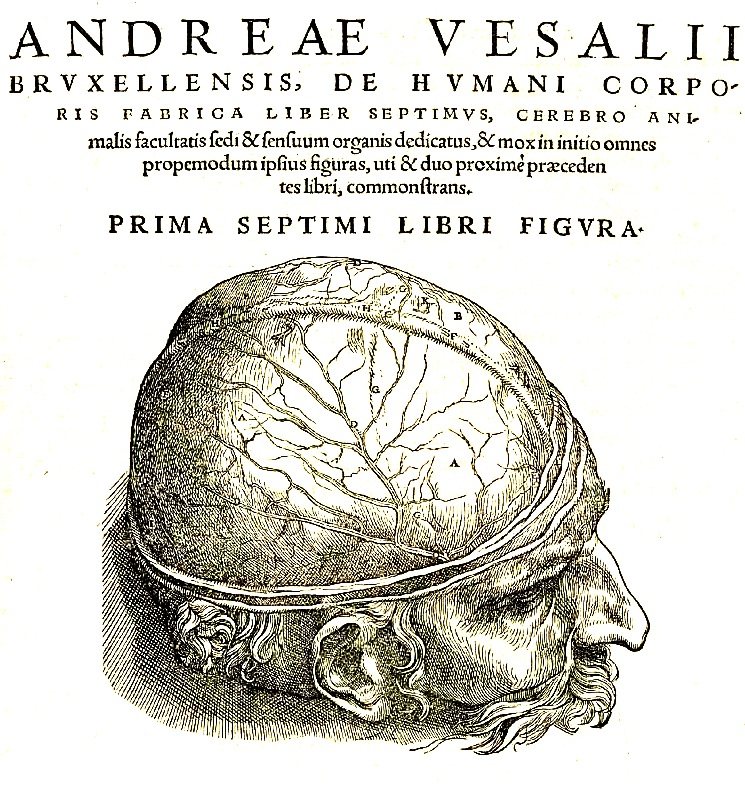
The makeup artist Jack Pierce had a story about the flat head. Anyone who was not a surgeon, he reasoned, would open a skull “like a pot lid,” and the monster’s head followed from that. He also said the design took three months of research and that the costume weighed 48 pounds. This is his own account, told in the years of publicity around the film.
The name slipped, too. Audiences almost immediately began calling the creature “Frankenstein,” Jameson notes in his Library of Congress essay, and Universal embraced it. By the 1935 prologue of Bride of Frankenstein, even Byron calls the monster “Frankenstein.”
The creator’s name had been taken by his creation.
Then there is the other monster’s face. In Lugosi v. Universal, decided in California in 1979, Bela Lugosi’s heirs sued over Universal’s licensing of his Dracula likeness on merchandise. The court held that the right to exploit a name and likeness was personal to Lugosi and did not pass to his heirs. The state legislature then created a post-mortem right of publicity, now California Civil Code section 3344.1, which lasts 70 years.
The man who played Dracula could not keep Dracula’s face in the family.
Universal also still holds the DRACULA and FRANKENSTEIN trademarks. A Foley Hoag legal blog describes a 2010 example in which Universal sent a cease-and-desist letter over a combination of neck bolts, green skin and a flat-topped head.
January 1
Now the date. On January 1, 2027, the two 1931 films, as released, enter the U.S. public domain. The novels have been free for ages, but what stays locked is everything that grew up around the films: the trademarks, the sequels, Philip Glass’s later score for Dracula, and possibly some likenesses. This is general information, not legal advice. See this week’s free issue for what you can and can’t use.
The date carries its own echo, since January 1, 2027 is 209 years to the day after Frankenstein first appeared, anonymously, in a run of 500 copies.
Take one more look at the playbill. In 1823 it said “--------- by Mr. T. Cooke.” In 1931 the credits said “?” Mary Shelley saw the first and called it rather good, but she did not live to see the second. After ninety-five years the blank is open again, and whoever picks these films up next will have to decide whose names go on the cast list.
Image sources
- Playbill, Presumption; or, the Fate of Frankenstein, English Opera House, 28 July 1823, Houghton Library, Harvard Theatre Collection, TCS 63 (Wikimedia Commons)
- The New Monthly Magazine, vol. 11 (1 April 1819), p. 195 (Wikimedia Commons)
- T. P. Cooke as the creature in Presumption, 1823, New York Public Library (Wikimedia Commons)
- James Stow, The Proscenium of the English Opera House in the Strand, 1817, Yale Center for British Art, B1977.14.18583 (Wikimedia Commons)
- William Wilkinson, An Account of the Principalities of Wallachia and Moldavia (London, 1820) (Internet Archive)
- Andreas Vesalius, De humani corporis fabrica (Basel, 1543), Book VII (Wikimedia Commons)
Related: When does Bride of Frankenstein enter the public domain? · Is Nosferatu public domain? · What enters the public domain in 2027