Bill Fleck writes Classic Horror Behind the Scenes. This piece is adapted, with his permission, from his two-part “Classic Horror Myths” series (Part 1, April 1, 2026, and Part 2, May 1, 2026, both updated October 23, 2026). Commons Cut edited it for length and style. The research and the findings are Bill’s.
Some stories about old movies get repeated so often that they harden into fact. Three of the most durable are about Universal’s Dracula, the 1931 film with Bela Lugosi.
Myth 1: Dracula premiered on Valentine’s Day
The story has a lot going for it. Lugosi had been called “The New Valentino” on Broadway, his mail was full of letters from women asking for the vampire’s kiss, and the film supposedly opened on February 14, 1931.
It was playing that day. By then it had been playing for more than a week.
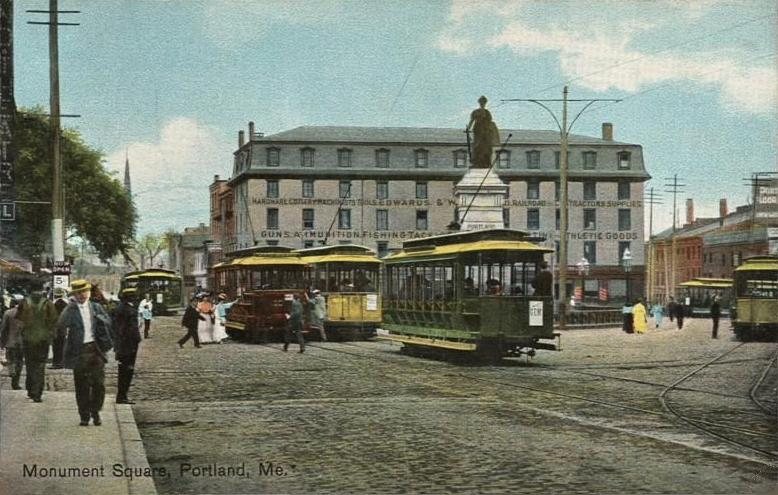
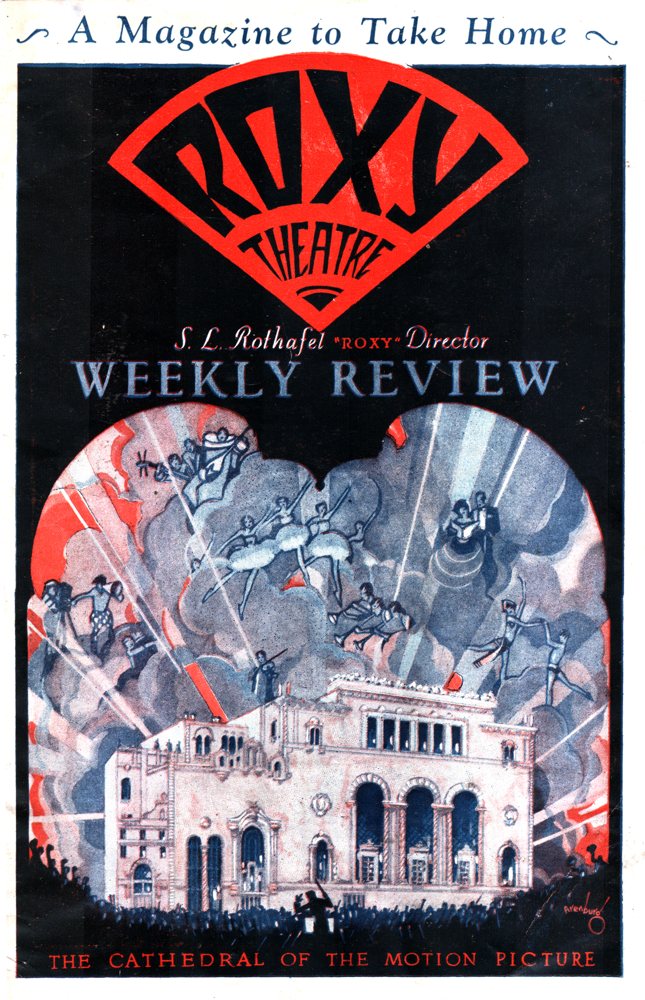
Dracula had its world premiere at Keith’s Theater in Portland, Maine, on February 5, 1931, and the people at Keith’s were proud enough to say so in print. On February 9 it opened at the Opera House in Bangor, Maine. On February 11 the Capitol in New London, Connecticut, gave it a “New England Premiere Presentation.” The New York opening at the Roxy, the one everybody pictures, came on February 12, the same day the film opened at the Paramount in Abilene, Texas.
Why Portland first? I haven’t nailed that down. My guess is Edward Van Sloan, who plays Van Helsing. He was very popular in Maine from his years touring in stock, and he and his wife, Myra, owned property there.
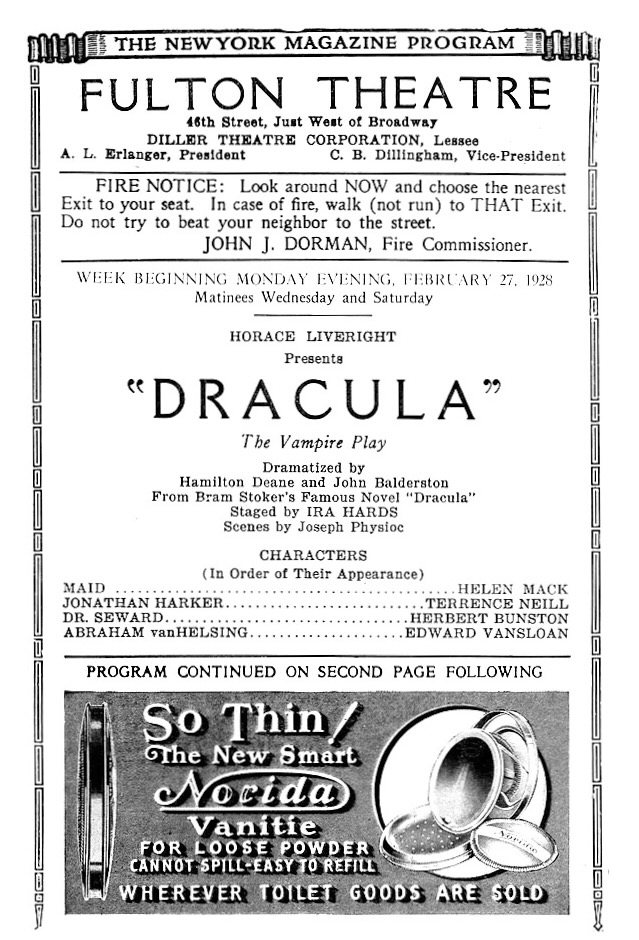
There is a real Valentine’s Day connection, and it may be where the mix-up started. After three years on tour, the stage play Dracula opened in London on February 14, 1927, at the Little Theatre in the Adelphi, with Raymond Huntley as the Count. The American production, with Lugosi, opened at the Sam S. Shubert Theatre in New Haven, Connecticut, on September 19, 1927. It reached the Fulton Theatre on Broadway on October 5 and ran for 261 performances.
Myth 2: Lon Chaney was set to play the Count until he died
It comes up over and over: Chaney was going to play Dracula, he died before production started, and Lugosi got the part instead.
No contract was ever signed. Chaney biographer Michael F. Blake did the heavy lifting on this, and Gregory William Mank, Gary D. Rhodes and David J. Skal have all been over the same ground. I went through their findings in detail in an earlier post, “Was Lon Chaney Really Going to Play Dracula?” Here is the short version.
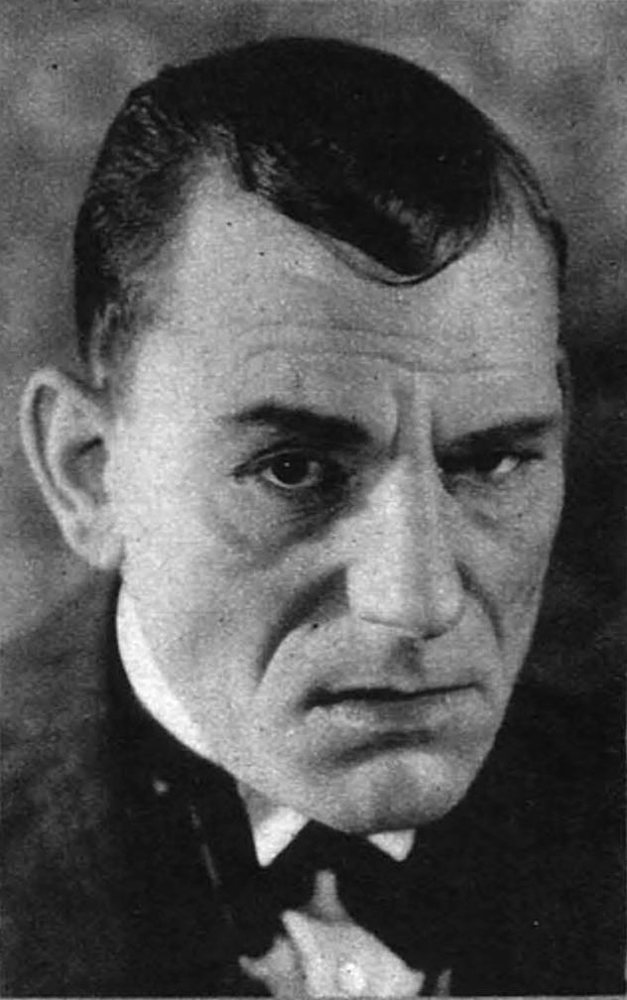
By the time Universal was negotiating for the rights with Florence Stoker, Bram Stoker’s widow, Chaney was under contract to MGM. He was unhappy with Universal. On or about December 15, 1929, the studio had released a patched-together sound version of his The Phantom of the Opera (1925), and at first it was happy to let audiences think a speaking character was Chaney. Universal later had to make clear in its ads that the voice wasn’t his.
He was unhappy with MGM too. The two sides were in the middle of contract talks, and Chaney was already fighting the cancer that killed him on August 26, 1930. MGM knew he was sick, though not how sick, and had suspended him without pay until he was well enough to work.
He wasn’t even Universal’s first choice. That was Conrad Veidt of The Man Who Laughs (1928), who went home to Germany once sound arrived because his English wasn’t strong.
Chaney and producer Carl Laemmle Jr. did negotiate over Dracula, and there was even talk of Chaney playing a dual role. Universal’s lawyers were sure he was too sick to pass an insurance company physical. Junior thought about insuring Chaney himself, and the lawyers talked him out of it.
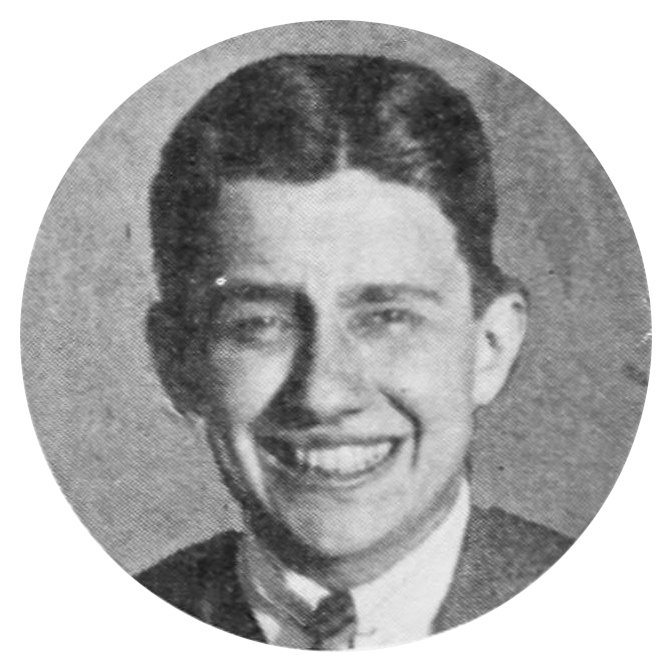
Chaney re-signed with MGM, and MGM probably wouldn’t have lent him out in any case. Blake wrote in 1990 that MGM’s only options were to buy the rights from Universal or to loan Chaney out, and that the loan was “improbable” unless “Universal paid them much more than Chaney’s weekly salary of $3,750.” MGM could have bought the property and made the film itself, and there’s no sign it was interested.
My read is that Chaney, a shrewd negotiator, was dangling Universal and Dracula in front of MGM to bring it to the bargaining table. It worked.
The done-deal version of the story appears to have started with Forrest J Ackerman, the editor of Famous Monsters of Filmland.
Myth 3: David Manners made four times what Lugosi did
The story goes like this. David Manners, who plays Jonathan Harker, was paid $2,000 a week, while Junior Laemmle got Lugosi for $500 a week because he knew how badly Lugosi wanted the part. David J. Skal, the author of Hollywood Gothic and usually a stellar scholar, repeated the $2,000 figure.
Plenty of the stories about Universal shortchanging Lugosi are true. This one isn’t, and the contracts show it. Gary D. Rhodes, with an important assist from Gregory William Mank, tracked down the paperwork and laid it out in his book Tod Browning’s Dracula:
- Manners was on loan from First National at $500 a week, with a four-week minimum, for a total of $2,000.
- Of that $500, Manners got $300 a week and First National kept $200.
- Universal also paid First National $1,500 as a “reimbursement for salary accumulation.” Manners didn’t see a penny of it.
So Manners made $1,200 on Dracula, and First National made $2,300 on Manners. Add those together and Universal’s cost to have Manners in the film comes to $3,500, exactly what it paid Lugosi.
Got a classic horror myth you’d like checked? Bill has more myths, including the King Kong spider pit and Lon Chaney Jr.’s birth story, on Classic Horror Behind the Scenes.
About the author
Bill Fleck is a writer and freelance musician. His blog, Classic Horror Behind the Scenes, has received a Rondo Honorable Mention for Best Website two years running. His books include Chaney’s Baby, Chaney’s Audition and Bela’s Monster. His biography of Edward Van Sloan is due in January 2027. All his books are on his Amazon author page.
Image credits
- Trolleys in Monument Square, Portland, Me., 1909 (postcard, Hugh C. Leighton Co., Portland, Maine). Wikimedia Commons. Public domain in the U.S. (published 1909, before 1931).
- Roxy Theatre Weekly Review, cover, March 10, 1928. Wikimedia Commons. Public domain in the U.S. (published 1928; Commons tags it PD-US-no-notice).
- Fulton Theatre program, Dracula: The Vampire Play, Week beginning February 27, 1928. Wikimedia Commons. Public domain in the U.S. (published 1928, before 1931).
- Lon Chaney portrait, Screenland, January 1923. Wikimedia Commons. Public domain in the U.S. (published 1923; scan at archive.org/details/ScreenlandJanuary1923, Public Domain Mark).
- Carl Laemmle Jr., The Moving Picture World, November 13, 1926. Wikimedia Commons. Public domain in the U.S. (published 1926; scan at archive.org/details/movingpicturewor83novd).
Sources
- Bill Fleck, “Classic Horror Myths Busted! (Part 1),” Classic Horror Behind the Scenes, April 1, 2026, updated October 23, 2026
- Bill Fleck, “Classic Horror Myths (Part 2),” Classic Horror Behind the Scenes, May 1, 2026, updated October 23, 2026
- Bill Fleck, “Was Lon Chaney Really Going to Play Dracula?,” Classic Horror Behind the Scenes
- Bill Fleck, “Edward Van Sloan: The Wisest Doctor of Them All!” Parts 1 and 2, Classic Horror Behind the Scenes, February 1 and March 1, 2026
- Michael F. Blake, Lon Chaney: The Man Behind the Thousand Faces (Vestal Press, 1990)
- Michael F. Blake, A Thousand Faces (Vestal Press, 1995)
- Gary D. Rhodes, Tod Browning’s Dracula (Tomahawk Press, 2014)
- David J. Skal, Hollywood Gothic (Faber and Faber, 1990; 2004)
- Arthur Lennig, The Immortal Count (University Press of Kentucky, 2003)
- Michael Brunas, John Brunas and Tom Weaver, Universal Horrors (McFarland, 1990; 2nd ed. 2007)
- Gregory William Mank, Bela Lugosi and Boris Karloff (McFarland, 2009)
- AFI Catalog of Feature Films, Dracula (1931)
- Newspapers cited in Bill’s Chaney research: Los Angeles Evening Citizen News (Dec. 4, 1929); The Standard Union (Jan. 25, 1930); The San Francisco Examiner (July 23 and 26, 1929; June 23, 1930); The Buffalo News (Apr. 18, 1930; Mar. 6, 1931); Los Angeles Evening Post-Record (Aug. 9, 1930); Buffalo Courier Express (Oct. 19, 1930)
- Contemporary theater notices for the Portland, Bangor, New London, New York and Abilene openings, February 1931, reproduced in Bill’s Part 1